Shadow-Banned and Kinky: The War Dating Apps Are Waging on BDSM Profiles
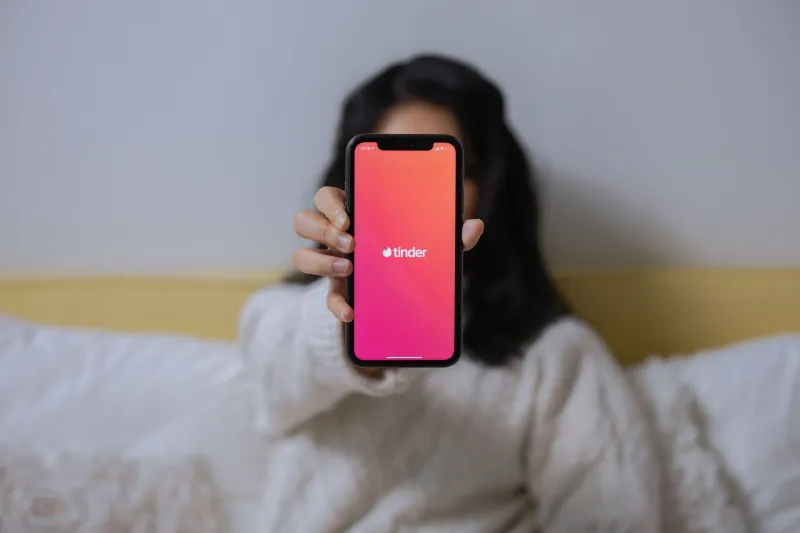
Let's set a scene. You're a thoughtful adult who knows what you want. You've done the work—you understand your kinks, you practice consent, you communicate clearly. You write an honest dating profile that mentions you're into BDSM. Maybe you list yourself as a Dominant. Maybe you mention rope bondage. Maybe you just put "kinky" in your bio.
And then... silence. Matches drop off. Visibility tanks. Your profile exists but might as well not.
You weren't banned. You weren't notified. You were shadowbanned—quietly buried by an algorithm that decided your honest self-identification made you a liability.
This is happening to thousands of kink-identified users across major US dating platforms, and the silence around it is worth breaking open.
The Mechanics of the Suppression
Shadowbanning—the practice of making a user's content invisible to others without informing them—is notoriously hard to prove because platforms almost never admit to doing it. But the pattern is consistent enough, and the community reports numerous enough, that it's no longer a conspiracy theory.
Here's what users report across platforms like Tinder, Hinge, Bumble, and OkCupid: profiles that include BDSM-related terminology see dramatically reduced match rates and profile views compared to equivalent profiles without those terms. Users who've run controlled experiments—same photos, same writing style, one profile kink-identified and one not—report significant visibility disparities. On some platforms, certain terms appear to trigger reduced distribution entirely.
The mechanisms vary. Some platforms use keyword filtering in bios. Others use AI content moderation that flags certain terms as potential policy violations. Some appear to rely on user reports—meaning a handful of offended swipe-lefts can trigger algorithmic suppression of an otherwise policy-compliant profile.
The Legal Gray Zone Nobody Wants to Talk About
Why are platforms doing this? The honest answer is complicated, and it starts with FOSTA-SESTA.
The Allow States and Victims to Fight Online Sex Trafficking Act, signed in 2018, made platforms potentially liable for user-generated content that could be construed as facilitating sex trafficking. The law was written broadly and enforced unpredictably, and it sent a chill through every platform that hosts adult-adjacent content.
Dating apps are in a particularly awkward position. They exist explicitly to facilitate sexual connection. But the moment they're perceived as facilitating organized or transactional sexual connection—even between consenting adults—they enter legal gray territory. The kink community, which often uses explicit language to describe desired dynamics and sometimes intersects with professional BDSM services, reads as higher risk to a compliance team than a vanilla user looking for "something casual."
So platforms default to suppression. Not because BDSM is illegal—it isn't. Not because kinksters are bad actors—most aren't. But because the legal architecture makes visible kink-identification a corporate liability, and it's easier to quietly bury those profiles than to build nuanced content policies.
Who Gets Hurt
This isn't a minor inconvenience for people who can just find other ways to meet partners. The suppression has real, disproportionate impacts on specific groups.
New explorers—people just beginning to understand their kinks—often turn to mainstream dating apps precisely because dedicated kink platforms feel intimidating. When their tentative self-identification gets buried before they can make a single connection, the message received is that their desires are shameful and unspeakable. That's a damaging message to send.
BDSM practitioners in smaller cities and rural areas have fewer alternative options. Dedicated kink platforms require a critical mass of users to be useful, and that mass often doesn't exist outside major metro areas. For someone in rural Ohio or Mississippi, Tinder might genuinely be the best available tool—until it isn't.
Marginalized practitioners—queer kinksters, kinky people of color, disabled BDSM practitioners—face layered suppression. They're already navigating algorithmic bias documented across multiple platforms. Add kink-identification on top and the visibility hit compounds.
The Double Standard Is Glaring
Here's what makes this particularly infuriating: the platforms suppressing kink-identified profiles are simultaneously running ad campaigns for Victoria's Secret, hosting users whose bios reference "daddy issues" and "being tied down" with zero algorithmic consequence, and profiting from a hookup culture they've built their entire business model around.
The issue isn't sexual content. It's explicit, honest sexual content. The kinkster who writes "I'm a rope rigger looking for a bondage-positive partner" gets buried. The user who posts thirst traps and implies the same thing through plausible deniability sails through moderation.
Honesty is being penalized. The algorithm rewards euphemism.
Where to Actually Find Your People
So where does that leave kink-identified daters in the US? With better options than the suppression would suggest, honestly.
FetLife remains the community backbone—less of a dating app, more of a social network, but local groups and events make it genuinely useful for meeting people in your area.
Feeld has carved out a niche as a kink and non-monogamy friendly platform with more explicit content policies. It's not perfect, but it's meaningfully more hospitable than the mainstream alternatives.
Dedicated kink events and munches—organized through NCSF-affiliated groups, local leather organizations, and scene-specific social networks—remain the highest-quality connection environment. People who show up in person have already self-selected for seriousness.
Reddit communities like r/BDSMcommunity and various regional subreddits function as informal connection spaces, with the usual caveats about vetting.
The practical strategy: use mainstream apps if you want to, but strip the explicit BDSM language from your profile and save the honest conversation for after you've established basic rapport. It's not ideal—it's a workaround for a system that shouldn't require workarounds—but it's functional.
The Bigger Problem
The suppression of kink-identified users on mainstream platforms isn't just an inconvenience. It's a visibility problem that reinforces shame, isolates newcomers, and pushes an entire community toward less-resourced alternatives.
Kinksters aren't asking for explicit content on Tinder. They're asking not to be penalized for honest self-identification. That's a pretty reasonable ask.
Until platforms develop the spine to build nuanced, fair content policies—and until the legal framework stops treating consensual adult kink as a liability category—the community will keep building its own infrastructure. Which, if the marketplace conversation is any guide, it's pretty good at doing.